How to Say Hello in Chinese: 12 Useful Greetings
Letsgo Chinese · March 5, 2026 · 3 min read
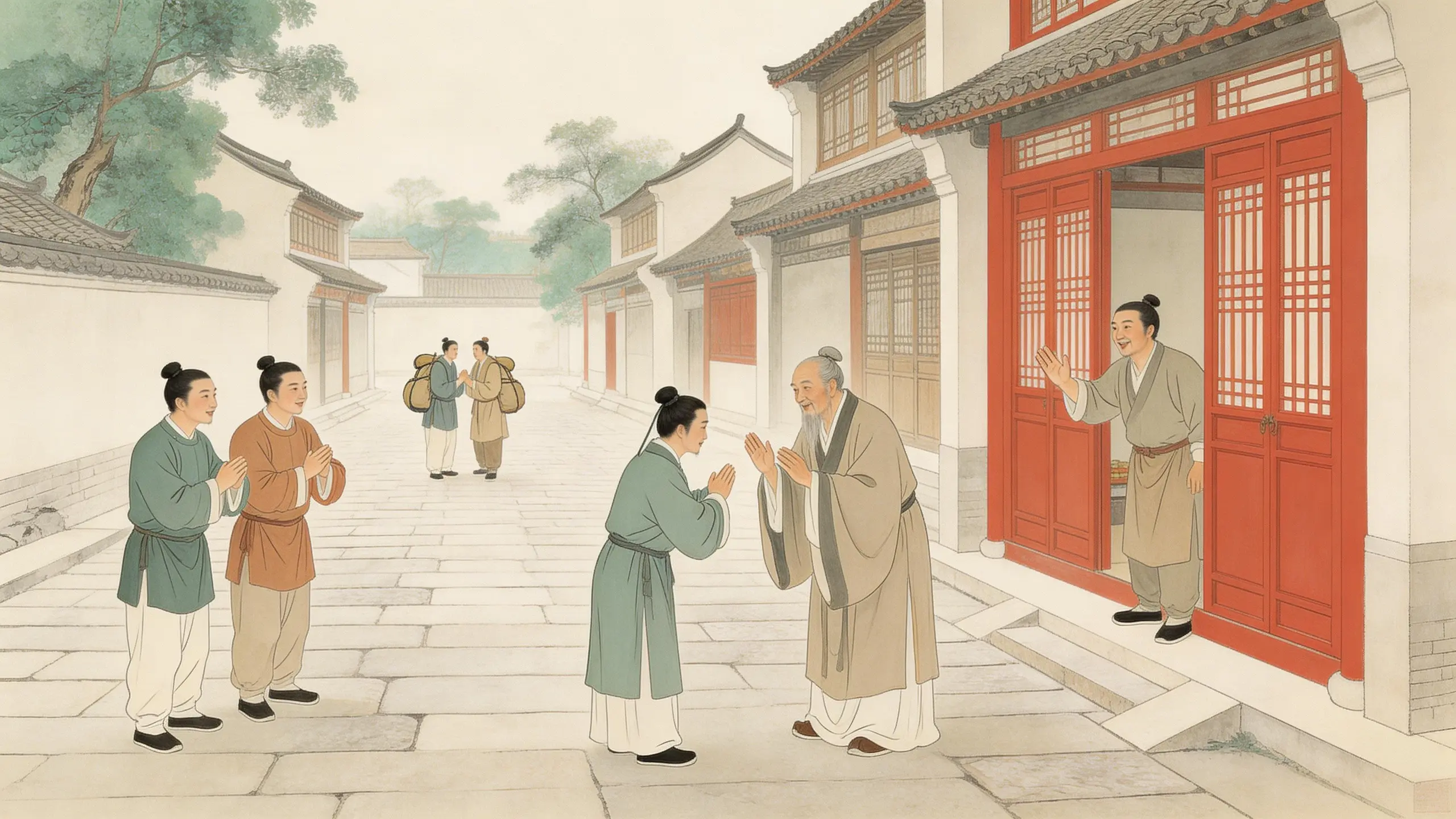
Every Chinese learner starts with 你好 (nǐ hǎo). But real conversation usually needs a little more range. Here are 12 greetings that native speakers actually use, from the most essential forms to more situation-specific expressions.
The Essential Greetings
1. 你好 (nǐ hǎo) — Hello
The standard, universally understood greeting. Safe to use with anyone, anywhere. Slightly formal for close friends but never wrong.
2. 您好 (nín hǎo) — Hello (Formal / Respectful)
The polite form of 你好. Use with teachers, elders, bosses, or any formal situation. The character 您 shows respect.
3. 嗨 (hāi) — Hi
Borrowed from English, widely used by younger generations. Casual and friendly — use with friends your own age.
4. 嘿 (hēi) — Hey
More casual than 嗨. Similar to "hey" in English — use with close friends only.

Practice in the Letsgo Chinese app
Watch native teachers pronounce each word with video
Time-Based Greetings
5. 早上好 (zǎo shang hǎo) — Good Morning
Used from waking up until around noon. Often shortened to just 早 (zǎo) among friends.
6. 下午好 (xià wǔ hǎo) — Good Afternoon
Used from noon until early evening. Less common in casual speech — most people just say 你好.
7. 晚上好 (wǎn shang hǎo) — Good Evening
Used after sunset. Common in formal settings and restaurants.
Greetings for Friends & Acquaintances
8. 你吃了吗?(nǐ chī le ma?) — Have You Eaten?
Literally "Have you eaten?" but used as a casual hello, especially among older generations. Don't take it literally — the correct response is 吃了 (chī le, "Yes, I have") or 还没 (hái méi, "Not yet").
9. 好久不见 (hǎo jiǔ bú jiàn) — Long Time No See
Used when reconnecting with someone you haven't seen in a while. Fun fact: this phrase was borrowed into English as "long time no see."
10. 最近怎么样?(zuì jìn zěn me yàng?) — How Have You Been Lately?
A warm greeting for someone you know well. More personal than 你好.
Situation-Specific Greetings
11. 欢迎 (huān yíng) — Welcome
Used to welcome guests or customers. You'll hear this walking into any shop in China.
12. 请问 (qǐng wèn) — Excuse Me / May I Ask
Used to politely get someone's attention before asking a question. Essential for travelers.
| Greeting | Pinyin | Best For |
|---|---|---|
| 你好 | nǐ hǎo | Everyone |
| 您好 | nín hǎo | Formal / elders |
| 早 | zǎo | Friends, morning |
| 嗨 / 嘿 | hāi / hēi | Close friends |
| 好久不见 | hǎo jiǔ bú jiàn | Reunions |
What to Say After Hello
Once you've said hello, you'll need these:
- 你好吗? (nǐ hǎo ma?) — How are you?
- 很好,谢谢 (hěn hǎo, xiè xie) — Very good, thank you
- 你呢? (nǐ ne?) — And you?
- 还好 (hái hǎo) — Pretty good / So-so
Ready to Master Chinese?
Download Letsgo Chinese and practice with real teacher videos.
Frequently Asked Questions
Is 你好 (nǐ hǎo) the only way to say hello in Chinese?▾
No — while 你好 is the most universal greeting, native speakers use many others in daily life. 嗨 (hāi) is common among younger people, 你吃了吗 (nǐ chī le ma) is used between friends, and 您好 (nín hǎo) is the formal version.
What's the difference between 你好 and 您好?▾
您好 (nín hǎo) is the formal, respectful version of 你好. Use 您好 with elders, superiors, or strangers in formal settings. 你好 is fine for most everyday situations.
How do Chinese people actually greet each other day-to-day?▾
In mainland China, a very common informal greeting is 你吃了吗 (Have you eaten?) — it's not a literal question about food, just a friendly way to say hello. 嘿 (hēi) and 嗨 (hāi) are also widely used among friends.